Websites for electricians, plumbers, joiners, roofers and builders.
Most of your work comes by word of mouth. Before somebody rings the number they were given, they look you up, and what they find decides whether they call you or the next name on the list.
- Electricians
- Plumbers and heating engineers
- Joiners and carpenters
- Roofers
- Builders, plasterers and kitchen and bathroom fitters
- Locksmiths, pest control and other emergency call-outs
What a homeowner checks before they ring.
Do you do the job they need? Do you cover their village? Are you properly qualified and insured? Has anyone local been happy with your work? A page that answers those four on a phone, with a button to ring you, turns a recommendation into a phone call.
It also saves you time. Clear services and an honest line on how you price work mean fewer calls for jobs you don’t do and areas you don’t cover.
What goes on the page.
- Your services, in the words customers use: rewires, boiler repairs, slipped slates, fitted kitchens
- The towns and villages you cover, named, so nobody has to guess
- Photos of finished work, and before-and-after pairs if you have them
- Your registrations and insurance, such as Gas Safe, NICEIC or NAPIT, and public liability
- Reviews from customers, with their first name and town
- A tap-to-call button and a quote form that comes to your email
Only the claims you can back up.
A gas engineer must be on the Gas Safe Register, and customers can check the number. Your page shows the registrations you actually hold, with the numbers if you want them there, and no badges you can’t show me. The same goes for response times and guarantees: the page says what you really do, because a customer who was promised an hour and waited four won’t leave a good review.
Two kinds of page for trades.
Most trades want the business site: everything about you in one place. If you mainly take urgent call-outs, such as locksmiths, emergency plumbers or pest control, a landing page can do better. It’s one page with your number at the top and nothing to wander off through. Both cost the same, and you can see both before you choose.
Examples, finished.
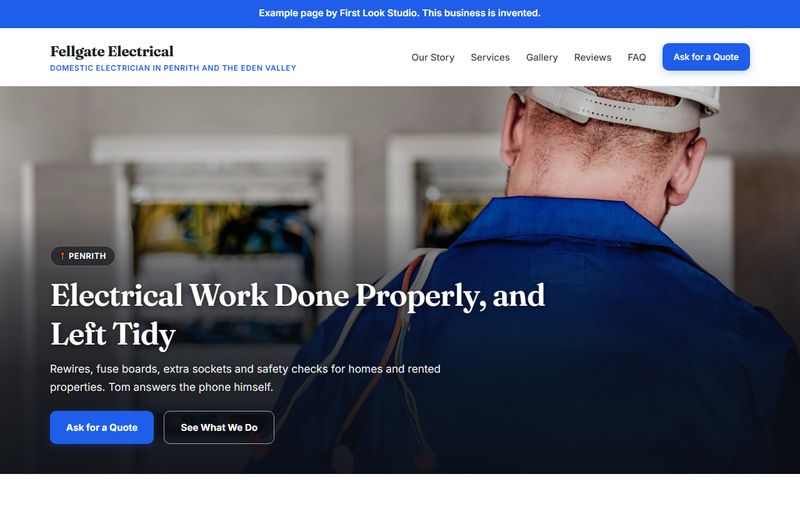
Fellgate Electrical
Domestic electrician in Penrith and the Eden Valley. Example business site.
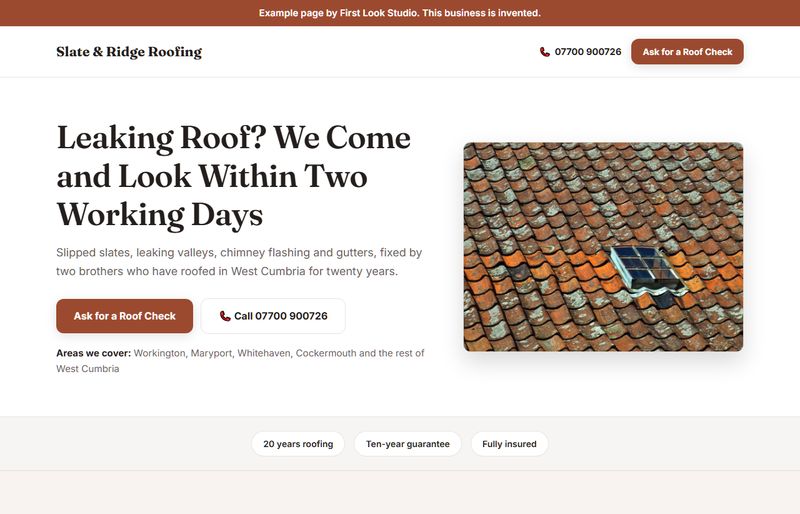
Slate & Ridge Roofing
Roof repairs across West Cumbria. Example landing page.
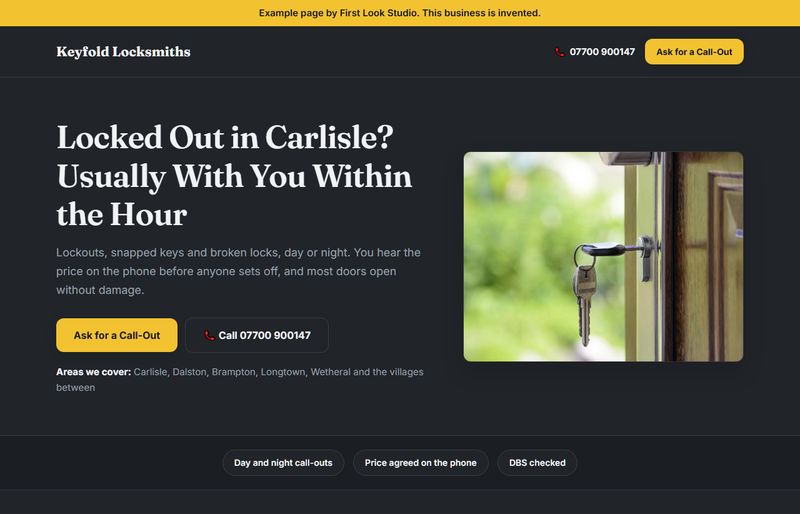
Keyfold Locksmiths
Emergency locksmith in Carlisle, day and night. Example landing page.
These businesses are made up; the pages are real, built in the studio the same way yours would be. See every example.
What it costs.
One-off build price for a business site, paid only once it has been online for a week and you’ve decided to keep it.
Hosting with your web address included, small changes and a mailbox at that address. Or £150 for a year, paid up front.
No deposit and no card to start. Hosting and web addresses explained.
How it works.
- Sign up freeNo card and no commitment.
- Fill in the designYour words and photos, in the studio.
- Online for a weekI finish it and put it online for you to use.
- Keep it or walk awayPay only if you want it. Otherwise, nothing to cancel.
Questions people ask.
I’m on Checkatrade or MyBuilder already. Why a website?
Those sites show you next to your competitors. Your own website is what people find when they search for your name, and it’s the one you can put on the van.
Can people send photos of the job?
The enquiry form takes their details and a description of the job, and it comes straight to your email. They can reply with photos from their phone.
I cover a wide area. Will it show up in all of it?
Naming the towns you cover helps people in them find you. No website can promise a place in Google, and I won’t.
Near the studio.
I’m in Appleby-in-Westmorland, between these four postcode areas. Anyone in the UK can sign up; this is what I know best.
Carlisle & North Cumbria
CA postcodes: Carlisle, Penrith, Appleby-in-Westmorland, Kirkby Stephen and around.
Businesses in Carlisle & North Cumbria →South Lakes & Lancaster
LA postcodes: Kendal, Windermere, Bowness, Ambleside and around.
Businesses in South Lakes & Lancaster →Darlington & the Dales
DL postcodes: Darlington, Bishop Auckland, Newton Aycliffe, Shildon and around.
Businesses in Darlington & the Dales →Dumfries & Galloway
DG postcodes: Dumfries, Annan, Gretna, Lockerbie and around.
Businesses in Dumfries & Galloway →Other kinds of business
- Cafés, restaurants & pubs
- B&Bs, holiday cottages & campsites
- Garages & MOT centres
- Hair, beauty & tattoo
- Fitness, health & wellness
- Independent shops & food producers
- Pet groomers, vets & kennels
- Professional services
- Weddings & events
- Lessons & mobile services
- Clubs, community groups & nurseries
- Launch & campaign pages
See your website before you pay for it.
Sign up, pick the design and fill it in. I build it and put it online for a week, and you decide after you’ve used it.